



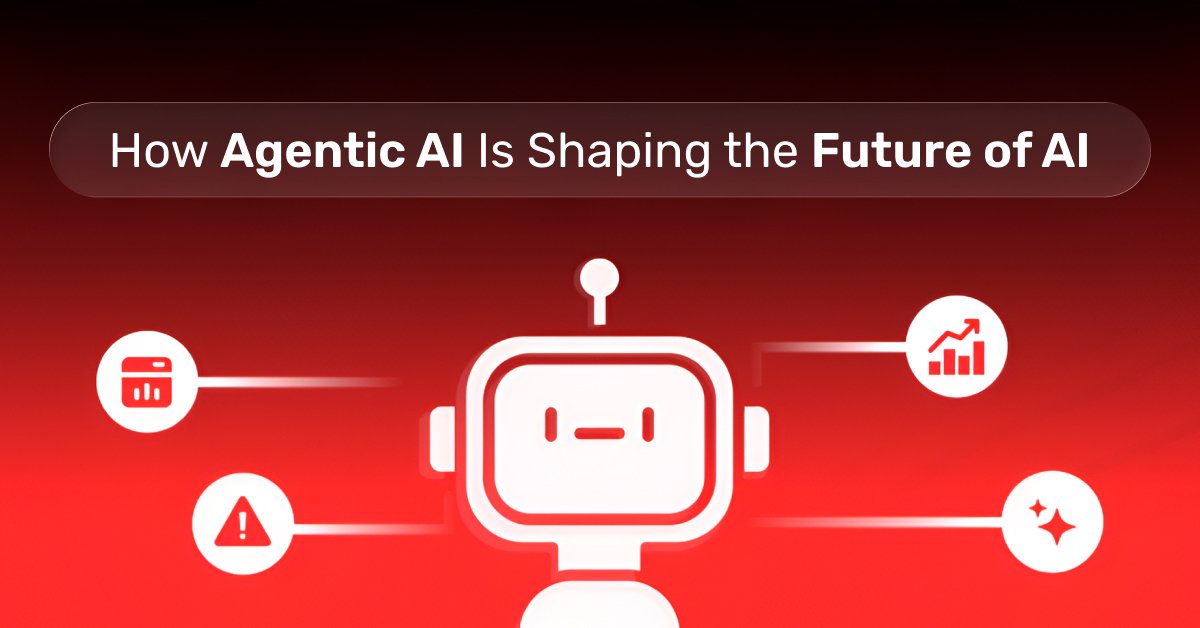
Artificial Intelligence (AI) has long since moved past the decision tree and rule-based programs. In the modern day, AI systems are not only able to learn with the help of data but are also becoming more and more autonomous, purposeful, and interactive. A new generation of AI, at the leading edge of this revolution, is agentic AI, which is a type of AI system capable of recognizing, planning, and acting, along with adapting to changing environments with minimal human input, e.g., FRD Studio. Whereas the traditional AI reacts to certain inputs based on programmed responses, agentic AI acts more like a partner: it formulates objectives, makes choices, and takes actions to serve the purposes.
Agentic AI Blog Table of Contents:
- What Is Agentic AI?
- Roots: The origin of agentic AI
- The Functioning of Agentic AI Fundamental Mechanisms
- Actionable AI Agentic AI: Clovis
- Changing the world by agentic AI: opportunities and benefits
- Dangers, Problems, and Ethical Implications
- Management and Control: Developing Communicative AI
- Future of Agentic AI: What Is Next?
- Conclusion: AI New Paradigm
- FAQs
This blog discusses the concept of agentic AI, the mechanism of its functioning, its significance, the technologies underlying it, the new types of applications, the risks and ethical considerations, and the future of agentic AI. Once you finish it, you will be well-equipped with the reasons as to why agentic AI is not simply a buzzword but a revolution that is defining the next phase of the digital age.
What Is Agentic AI?
The agentic AI is a system of behavior that acts as an agent that is capable of:
- Process senses responding to inputs of data,
- Decision-making on the basis of goals and internal models,
- Act on your own initiative to perform actions.
- Get used to adaptation and have feedback.
To put it simply, classical AI may forecast the weather or identify objects in a picture. In contrast, agentic AI can decide which actions to undertake next, e.g., plan a sequence of actions, prioritize, or even negotiate with other systems or humans.
The basis of this autonomy is based on a number of characteristics:
Goal-Directed Behavior:
The agentic systems are designed with goals, either explicit or acquired, and how to attain them in the best way possible, which can boost the top design agency in Gurugram. This renders them proactive rather than reactive.
Making Decisions in the Face of Uncertainty:
In contrast to the rigid scripts, agentic AI considers the alternatives, calculates risks and benefits, and chooses the actions even in cases where the results are uncertain.
Self-Directed Action:
After the setting of the goals, agentic AI begins its operation without requiring constant human intervention. This may be steering a robot in a warehouse or writing and sending emails, depending on the priorities of a user who can make the most trusted design agency in Gurugram.
Feedback and Learning
Reinforcement learning mechanisms are commonly used in agentic AI to enhance performance according to the performance. It is more effective with time, as it is enhanced through trial, error, and reward feedback.
All these features result in agentic AI being a step toward creating a machine that can perform more like a deliberate partner and can boost the performance of the marketing agency in Gurugram.
Roots: The origin of agentic AI:
The idea of computing agents is not a new one. Intelligent agent research is not new and dates back to the 1980s, particularly in robotics, autonomous vehicles, and multi-agent systems. Nevertheless, multiple advances have coincided in the recent past to speed up agentic AI
Deep learning and machine learning:
The development of neural networks has provided AI systems with capabilities to identify patterns, reason in complex spaces, and infer based on data.
Reinforcement Learning :
This is a subcategorization of AI that allows systems to gain the most desirable strategies through trial and error. Reinforcement learning forms the basis of agentic behavior since the method is a reflection of the consequence-based learning mechanism of living organisms.
Artificial Intelligence: Natural Language Understanding:
The current generative models (such as GPT-style large language models) can comprehend and produce human-like text, and therefore, agents can communicate, negotiate, and reason in natural language.
Systems Integration:
Perception, planning, control, and communication are commonly found together in agentic AI and integrated within a software architecture that deals with real-time interaction and adaptation.
The convergence of these technologies has turned the conceptual agents into practical systems that are able to accomplish tasks in the real world.
The Functioning of Agentic AI: Fundamental Mechanism:
In order to conceptualize agentic AI, it is good to deconstruct the major elements of a standard agent:
Perception:
Sensors or data inputs, such as vision systems when used by robots, APIs when used by software agents, telemetry when used by autonomous vehicles, or textual entries when used by digital assistants, can be referred to as agents.
State Representation:
The agent develops an internal representation (referred to as a state) of the existing situation. This model assists in contextualizing and decision-making.
Decision Module:
In this case, the agent assesses the potential courses of action based on planning algorithms, reward models, or learned policies. As an illustration, a delivery drone can be controlled to consider the routes of flights in terms of speed, safety, and weather.
Action:
The agent takes a selection and acts on the selection—moves motors in the robot, makes a network request in the software, or creates a text response.
Feedback and Learning:
The agent monitors the consequences of actions, updates its model, and changes future behavior. Adaptation and improvement are made possible by this learning loop.
The following are a few models that enable such mechanisms; these forms include:
- Markov Decision Processes (MDPs)—in sequential decisions.
- Policy Networks in action selection in reinforcement learning,
- World models that are environment simulators.
- Multi-Agent Architecture. Multi-agents work or compete
A combination of these elements enables agentic AI to be purposeful, to be flexible, and to be cognizant of its context.
Actionable AI Agentic AI: Clovis:
The agentic AI is not a distant dream; as a matter of fact, it is already being applied in different fields. The most prospective and practical applications are as follows:
Autonomous Vehicles:
Autonomous cars and drones are contextual because they respond to the world through an agentic mode of decision-making to plan paths and achieve zero accidents. They must react to the uncertainty of the environment: the traffic, pedestrians, weather, etc and optimize their safety and efficiency
Personal Computer Assistants:
Besides basic planning or notifications, the future digital assistants will have the ability to anticipate, rank, create context-sensitive responses, and carry out tasks on behalf of the user. Take an example of a helper who negotiates invoices, participates in complex travel arrangements, or manages the work process on his own.
Robotics and Automation:
In warehouse logistics, medical care robots, and numerous other applications of agentic systems, movement, task priority, and interaction with human beings or other machines can be determined on demand.
Smart Manufacturing:
The industrial application of agentic AI can be used to maintain production time and optimize it,, and can dynamically respond to unfavorable supply conditions or failures.
Finance and Trading:
Autonomous trading agents can conduct market analysis, extensive implementation of strategies,, and not be responsive to shifts in the market, raising regulatory and ethical issues.
Cybersecurity :
The agentic AI can detect anomalies, take actions against any threat in real-time, and plan defensive actions without solicitation of human response.
These applications are witnesses to the fact that agentic AI can be applied to add to the output and cross the complexity that could not be previously solved.
Changing the world by agentic AI: Opportunities and benefits:
The possible power of agentic AI is transformative for any industry and society:
Increased Efficiency:
In the case of agentic systems, it reduces human workload since all the decisions and actions are automated, and the work is conducted at an increased speed.
24/7 Operation:
Agents don’t need rest. They can be on duty 24/7 and improve the level of responsiveness in customer service, security, or monitoring.
Handling Complexity:
The agentic AI succeeds in cases of having too many variables and when the result is uncertain and cannot be taken into account through traditional programming.
Personalization:
The agents are able to tailor services to individuals based on the learning of preferences and behavior, whether it is in the healthcare industry, in education, or in entertainment.
Collaborative Workflows:
The agentic systems may be applied in future workplaces as co-workers in the capacity of engaging in auxiliary tasks, as humans are preoccupied with creativity and strategy.
These advantages guarantee that agentic AI is a productivity and innovation driver.
Dangers, Problems, and Ethical Implications:
Even though agentic AI is a potential that could have far-reaching potential, it also encompasses significant concerns that a person must address:
Loss of Control:
Direct supervision in decisions is lacking and is called autonomy. One of the main research and governance dilemmas is to guarantee secure and consistent conduct.
Unintended Consequences:
Damaging shortcuts may be employed by the agents that optimize flawed goals. As an example, an agent that is expected to maximize the number of clicks might like sensationalist or deceptive information.
Bias and Fairness:
Agents are formed with the help of data, and when the data is formed by the prejudice of society, the agents can have a chance to enforce or develop discrimination further.
Security:
Having independent agents may be subject to exploitation or hacking. This danger is acute in such crucial spheres as transportation or money.
Economic Disruption:
It can lead to agentic automation that is going to take jobs away, especially with routine ones. This has the need to prepare the workforce to be reskilled.
Ethical Autonomy:
When are agents able to make life-changing decisions? The issue of autopilot car moral dilemmas and ethical puzzles is unsolvable, like the problem of medical diagnostic agents.
These problems will be resolved by interdisciplinary co-operations, i.e., engineers, ethicists, policymakers, and civic society must cooperate to come up with structures that will make agentic AI helpful to human beings.
Management and Control: Developing Communicative AI:
Considering that agentic AI may be disruptive and transformative, governance mechanisms are increasing:
Transparency and Comprehensibility:
It is anticipated that agents may be auditable and give their reasons where needed. It is hard to believe the autonomous decisions of a black box.
Alignment with Human Values:
Agents should be directed to the attainment of goals that are an indicator of human well-being by designing, testing, and supervising them.
Safety Standards:
Though aviation and pharmaceuticals are presumably checked as harmless, agentic AI (particularly in hazardous locations) may need to be subjected to common testing and certification.
International Dialogue:
AI doesn’t respect borders. It should have international cooperation in setting the standards of responsible development and deployment.
Inclusive Policy Making
Regulations should be developed to reflect the opinions of all stakeholders, who would be the workers, underrepresented societies, and final users, to attain equitable outcomes.
By adequately grounding agentic AI on legitimate ethical and legal practices, society is able to ensure that it optimizes benefits and eliminates harms.
Future of Agentic AI: What Is Next?
Several long-term trends are likely to have an impact on the growth of agentic AI in the future, which include:
Hybrid Intelligence:
The agents will not completely substitute human beings, but they will be complementary to human capabilities. The employment of mixed systems between humans and agents in problem-solving will be the order of the day.
Multi-Agent Collaboration:
There are multiple independent actors in complex systems that can manage to coordinate, negotiate,, and compete, and thus lead to emergent behavior of abilities that are greater than the sum of the individual actors.
Lifelong Learning:
The agents will not be retrained to accommodate new situations and changing environments, and they will always learn once they are deployed.
Ethical Intelligence:
Ethical thinking can also be included in the agents, which is the possibility to make a compromise between efficiency, fairness, and moral aspects.
Ubiquitous Integration:
In other smart homes and cities, an agentic AI will be incorporated into the infrastructures to optimize energy usage, traffic congestion, and services to the populations.
In other words, agentic AI will not be as much of a standalone system, but rather more of an ecosystem establishing a radically new lifestyle, workplace,, and value-creating way.
Conclusion: AI New Paradigm:
The concept of agentic AI is a shift from the paradigm of passive tools to independent partners. It integrates perception, learning, and action in systems capable of finding a way through complexity with a purpose. On one hand, the opportunities are enormous, as it can be smarter cities, personalized digital assistants, etc. On the other hand, the obstacles are no less significant.
And finally, the future will depend on the quality of the way agentic systems are designed, managed, and humanized. When done in a responsible manner, agentic AI may bring about a new era where humans and intelligent agents come up with solutions to the most pressing issues of the society they live in.
The future is not about smarter machines, but it is about creating intelligent companions that will help us increase the capabilities of humans, and at the same time respect the values that we cherish. That future is being built by agentic AI, and we are just in the early stages of realizing that potential.
Frequently Asked Questions:
What is agentic AI?
Agentic AI is a system capable of processing data inputs, decision-making on goals, self-directed actions, and adaptation via feedback like FRD Studio.
How does agentic AI differ from classical AI?
Classical AI forecasts weather or identifies objects, while agentic AI plans actions, prioritizes, and negotiates autonomously.
What defines goal-directed behavior in agentic AI?
Agentic systems pursue explicit or acquired goals optimally, boosting the top design agency in Gurugram performance.
What enables decision-making under uncertainty?
Agentic AI evaluates alternatives, calculates risks/benefits, and chooses actions despite uncertain outcomes.
What is self-directed action in agentic AI?
After goal-setting, agentic AI operates independently, like writing emails based on user priorities for the most trusted design agency in Gurugram.