



First impressions are important in this new digital and fast world, and your site is likely to be the first to shake hands with your brand and potential buyers. It is possible to observe the attractive design of the site, and the ability to follow the UI (User Interface) and UX (User Experience) will transform people into faithful customers. Great UI/UX design is not merely about making a website look good but also about making it intuitive, credible, and conversion-oriented. This article will discuss the reasons behind high-converting websites being supported by efficient design and how wise design decisions can directly affect customer behavior and business growth.
Table of contents :
- Introduction
- The Insider Knowledge of UI and UX
- The Psychological Warfare of Web Conversion
- The Effect of UI/UX Designs on Conversions
- Information Architecture and Navigation
- Eye-Tracking and Visual Hierarchy
- Performance and Speed of Loading
- Mobile Responsiveness
- Clear and Persuasive CTAs
- The Part of Microinteractions in Conversions
- Trust Signals and User Experience Cohesion
- Accessibility Conversion
- Driven UX: Analytics and Testing
- Case Study: On-the-Job Perfection
- Top UI/UX Errors That Are Killing the Deals
- The Great UI/UX Business Impact
- Conclusion
The reason why UI/UX design is the secret ingredient of websites with high conversion.
- A site in the digital age is not simply an online shopfront but a breathing, living experience that defines the perceptions of your brand and your customer experience with whatever you have to offer.
- Although the visual appeal of any website can be a drawing force, a mixture of User Interface (UI) and User Experience (UX) design is what will make the difference between visitors who stick, browse, and eventually become converts.
- UI/UX design does not simply look beautiful; it works beautifully. In this post, we are going to explore the reasons why the design of websites that are the best converters is the UI/UX and how it affects the psychology of the user, or what a business can do to convert best, like FRD Studio is doing.
The insider knowledge of UI and UX: The essential difference.
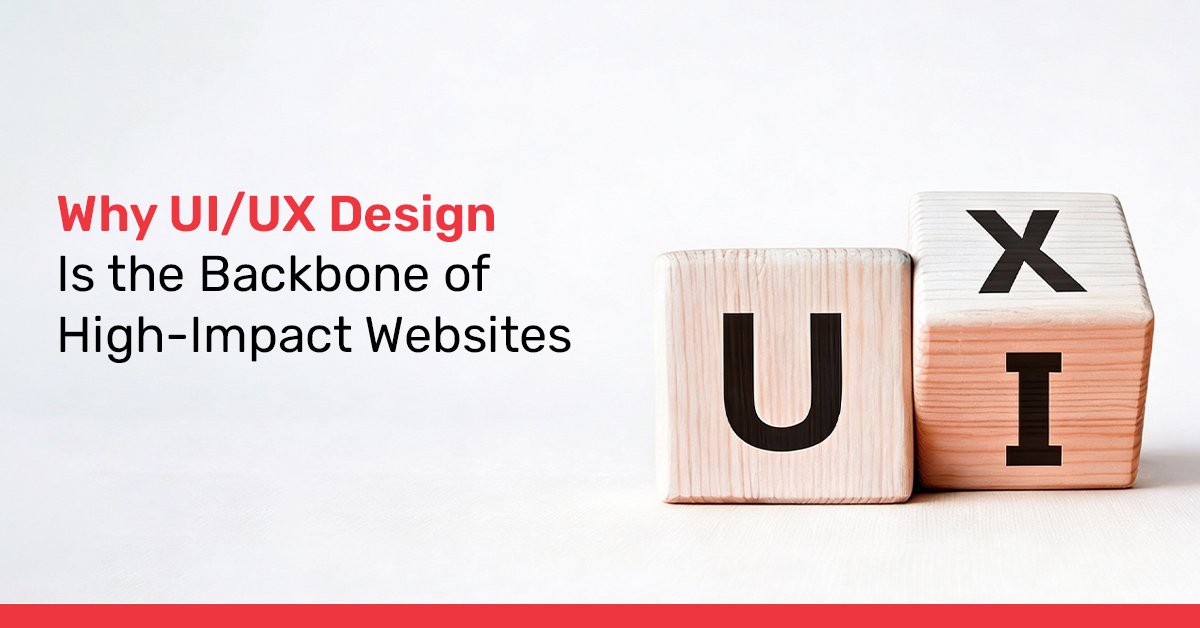
UI and UX are two complementary and different but similar fields in web design.
- UI (User Interface) is a term describing the visual aspects of a site, typography, color scheme, buttons, icons, animation, and layout. It is what the users are looking at and are in direct contact with.
- UX (User Experience) deals with the overall experience of the interaction—the simplicity of navigation, the clarity of information, and the emotional gratification of interacting with the site—and makes it the top design agency in Gurugram.
- Imagine it in the following way: A website is a car; the UI will consist of the dashboard, seats, and details of the design that you touch and see; the UX will be how well the car drives, how natural the pedals are, and how nice it is to ride.
- Both are seamlessly integrated into a really successful website. Without good visuals, you will not have a great experience, and good visuals do not matter when users have difficulties locating what they need.
The Psychological Warfare of Web Conversion.
The users will be subjected to a biased decision process of hundreds of micro-interactions before clicking that “Buy Now” or “Book a Consultation” button. A well-designed UI/UX takes into account all such psychological triggers and adjusts the user experience to these triggers.
This is the impact of powerful design on conversion:
- Build Trust in First Impressions:
Decisions to trust or not trust a website are also made within less than 0.05 seconds, depending on the aesthetics. Less is more design, corporate color scheme, and the capability to build up a cohesive brand lead to immediate trust. - Cognitive Comfort and Simplicity of Decision:
The less complex your site is, the more people will do. Complexity in structure raises friction, which results in decision fatigue. - Instead of offering experiments, this statement implies action, which needs to be taken.
- Emotional Design Drives Action:
Emotions are induced by colors, typography, and graphics. Red can be used to establish a sense of urgency, blue can be used to build trust, and the white space can be used to create a calming effect. The effective UI utilizes them to attract conversions through these emotional triggers. - Familiarity is a result of uniformity:
The use of repetitive design elements, such as the use of the same style of buttons, the presence of clear calls-to-action (CTAs), and the use of logical navigation, makes the user feel at ease with the exploration of more pages, which lowers bounce rates.
The effect of UI/UX designs on conversions.
Design conversion is not about sales pressure; it is about getting barriers out of the way and helping the users to achieve their objectives with ease, and making it the most trusted design agency in Gurugram. We will examine a few of the major areas where UI/UX has a direct effect on performance indicators.
Information Architecture and Navigation.
The surest way of losing potential customers is to have a confusing structure of site. Good UX also means that the structure of each page should be clear, with a hierarchy so that the user can be sure of what page they are on and where to go.
Best practices include:
1. Labels on the menu (i.e., What We Do) that show user intent (e.g., Our Services).
- Rational grouping with instinctive internal association.
- A search engine with precise and suggestive results.
The result? Lower bounce and elevated time-on-site rates, which are both reflections of a path that one will naturally follow to conversion.
2. Eye-tracking and Visual Hierarchy.
- Successful UI utilizes human visual behavior. The heat maps indicate that people tend to browse sites either in F or Z format, i.e., first to the upper-left corner of a site and then on a diagonal.
- These visual hotspots have the most sought-after CTAs or information placed in a well-crafted interface. The contrasting colors, whitespace, and weight of typography further lead the attention of the user where it is needed, namely towards conversion-driving elements.
3. Performance and speed of loading.
- Performance optimization is also an integral concept of UX. Google argues that more than half of users will abandon a page that takes more than three seconds to load. Measures such as Largest Contentful Paint (LCP) and Cumulative Layout Shift (CLS), which are included in tools such as Core Web Vitals, are directly related to the way users experience speed and stability and boost the performance of the marketing agency in Gurugram.
- Image optimization, lazy loading, and code bloat reduction not only make the site easier to use but also increase its visibility in the search results, which is good both in terms of visibility and conversion.
4. Mobile Responsiveness
- Responsive design is no longer an option but a necessity, with more than 60 percent of all web traffic generated by mobile devices. The mobile UX quality will imply making it easy to tap the buttons, read the texts, and change the layout on smaller screens.
- A reactive and responsive design guarantees a device-consistent experience, which enhances brand trust and increases the number of users converting to mobile.
5. Clear and Persuasive CTAs
The link between the engagement and the conversion is your CTAs. Websites with high performance apply contrast, spacing, and linguistic clarity to highlight CTAs.
For example:
- “Get Started” is more welcoming than “Submit.”
- Visual harmony is not broken by using color contrast, as in the case of a bright accent on the neutral background.
- The A/B testing of various CTA designs and placements can provide an important clue to what motivates your particular audience into action.
The Part of Microinteractions in Conversions.
- Microinteractions—little functional animations or visual feedback to the user—make users delighted and provide real-time feedback.
Examples include:
- A heart-filling in case a user likes a product.
- The presence of a progress bar in the checkout process.
- Highlighting effects on an image or a button.
These are the minor gestures that make a website more active, emotional, and natural. They support positive behavior, which makes the user feel empowered and active during his or her path.
Trust Signals and User Experience Cohesion.
The most appealing site will not get any conversion without trust. The trust-building factors consist of a sequence of features applied by UX designers to ensure users are relaxed and reassured.
Some examples include
Testimonials, reviews, client logos, and success metrics are some the examples of social proof that are authentic.
- Security signals: The use of SSL certificates, secure payment symbols, and clear privacy policies makes it credible in the process of making transactions.
- Easiness of understanding: Clear typography, homogenous tone, and correct information eliminate uncertainty and indecisiveness.
All trust signals must look like they have been naturally incorporated in the design; they should not be imposed or pushy.
Accessibility Conversion.
What can be a blind spot of UX is accessibility. Inclusive design makes sure that the disabled individuals are able to access, interpret, and navigate your site. Such page enhancements as image alt-text, a high contrast ratio, and keyboard navigation are not only ethical but also increase your potential customer base.
Conversion opportunities are increased in cases where the users are comfortable interacting, irrespective of their ability or device.
Driven UX: Analytics and Testing.
The contemporary UX design is based on constant improvement. The tools, such as Google Analytics, Hotjar, or Crazy Egg, can show precisely where users leave the process, which buttons remain untouched, and where the pages occupy the bulk of the interaction with users.
This data is used by designers and marketers in order to perfect their layouts, update material, and test by:
- A/B Testing: It is used to compare one version of a page or part to another to determine which works better.
- User Feedback: Surveys and usability tests, as well as focus groups, reveal concealed points of friction.
- Conversion Funnels: Dynamics Mapping the entry-purchase process can be used to determine where prospects lose momentum.
With the help of data-supported iterations, the UI/UX will be a dynamic system that can conform to user behavior and market changes.
Case Study: On-the-Job Perfection.
Designs that are user-focused will always be able to beat other companies in conversion rates.
- Airbnb has transformed its homepage to focus on authenticity and simplicity, which led to a 30 percent increase in bookings.
- Minimalistic images and a single major CTA helped Dropbox decrease the number of bounces to a minimum.
- The A/B testing culture at Amazon guarantees that every minor modification in the color of a button or copy can result in millions of dollars of increment in revenues.
These illustrations bring out an obvious fact: design conversions do not happen by chance; they are the result of painstaking, sensitive creation.
Top UI/UX errors that are killing the deals.
The pitfalls should be shunned in the same way best practices are applied. The following are some of the conversion-destroying design mistakes:
- Confusing designs with high competing costs.
- Weak CTAs in text-based discussions.
- Lacking links to navigation, which are frustrating.
- Failure to zoom or scroll, i.e., the mobile is not optimized.
- Excessive use of pop-ups disrupts the flow of users.
These are taken into consideration by a powerful design process that puts emphasis on minimalism, testing, and loops of feedback.
The Great UI/UX Business Impact.
- Professional UI/UX design does not cost the company vanity, but it is a business strategy with high returns. A study by Forrester presented results of the use of one dollar on UX to yield a range of up to 100 dollars. Why? Intuitive experiences minimize user churn, encourage repeat visits, and create loyalty because of their ability to reduce user churn.
- Other than figures, high design enhances brand perception. It portrays professionalism, care, and customer focus, which automatically translates to advocacy and word-of-mouth expansion.
Conclusion :
- Websites with high conversion do not occur randomly. The key to each seamless user experience is a careful user interface design, an evidence-based UX plan, and thorough knowledge of human behavior. At the intersection of these elements, brands do not just make websites—they make experiences that people want to act on and trust.
- With multiple options available limitlessly to users nowadays, a visitor and a customer can be separated by a simple factor: design. Your user-friendliness and user experience are not only favorable to the success of your site, but they are also success itself.
Frequently Asked Questions:
Why does UI/UX matter for conversions?
Thoughtfully crafted UI/UX ensures users trust your brand quickly and move smoothly toward actions like sign-ups or purchases, which is exactly what FRD Studio optimizes for on every project.
How is UI different from UX in web design?
UI is the visual layer users see and tap, while UX is the overall journey and feeling of using the site—FRD Studio combines both to turn visits into measurable conversions.
How does FRD Studio use psychology in UI/UX?
FRD Studio uses color, layout, and microcopy patterns that reduce decision fatigue and gently guide users toward your primary call-to-action.
Can a better UI/UX really increase my website’s ROI?
Yes, improving user experience consistently boosts conversions and lifetime value, which is why FRD Studio treats design as a business-growth lever, not just a visual upgrade.
What does FRD Studio focus on first to improve conversions?
FRD Studio first fixes friction points in navigation, content clarity, and CTAs so users instantly know where to go and what to do next.