


February 9, 2026
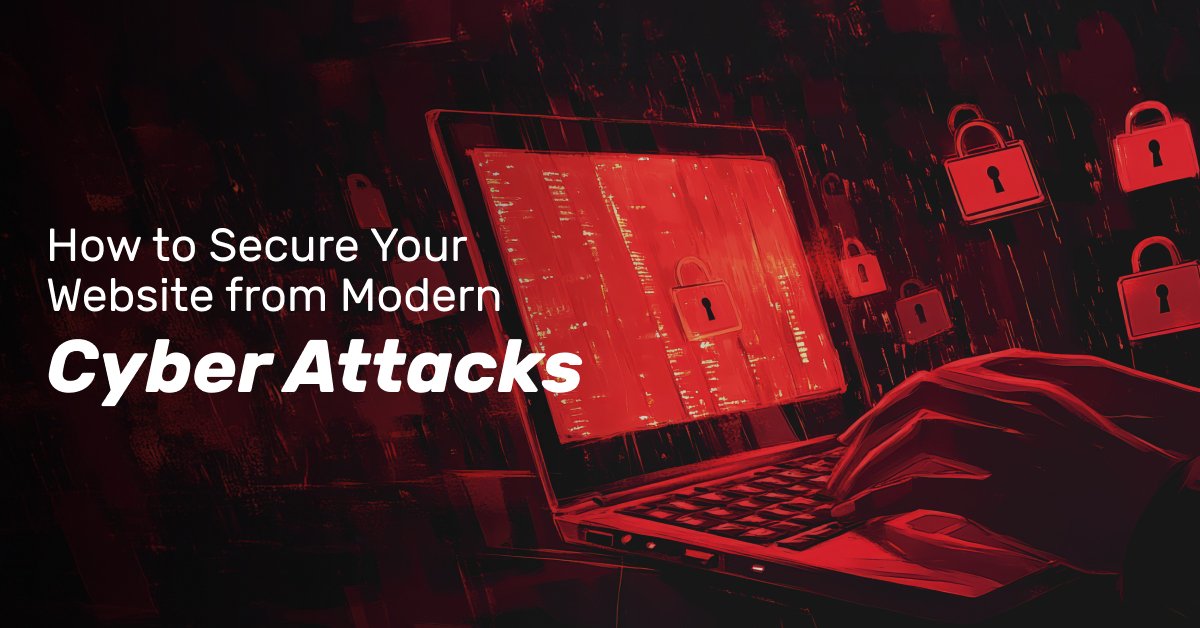
Amazing websites like FRD Studio play a crucial role in portfolios, customer attraction, and great creative work, which are the main objectives of design agencies. Effective website security solutions will be essential in 2026, when cybercriminals will set their eyes on creative firms and steal their valuable goods, such as intellectual property and customer designs.
Table of Contents:
- The Cyber Threats to Creative Organizations and the Way They Grow
- Identifying Some of the Current Cyber Threats
- Implement the Use of HTTPS Protocols Everywhere
- Configurations to Install Creative Stacks Automatic Patches
- Develop Bulletproof Authentication for Clients and Teams
- Introduce a Web Application Firewall (WAF) to Your Websites
- Rinse Inputs of Threats
- Least Privilege Principle in the Agency Environment
- A Good Backup Plan for Your Creativity
- Ongoing Monitoring and Response to Incident
- Server Backup and Content Delivery Network
- Incorporating Safety into Processes of Design
- Design World Threats
- Vendor and 3rd Party Security
- Calculation of Return on Investment on Security Investments
- Long-Term: Building a Culture of Security-First
The Cyber Threats to Creative Organizations and the Way They Grow.
Business Design: Businesses design businesses that fall prey to various cybercrimes, such as scraping of portfolios by artificial intelligence (AI) robots to use illegally, ransomware encryption of design files, and phishing attacks that masquerade as client briefs. In the preceding year, design companies experienced a 40 percent surge in security breaches, which were mainly caused by old CMS plugins or uncovered Figma/Adobe interface APIs.On your portfolio galleries, contact forms, and client log-ins, cybercriminals get access points to attack your portfolio. A Distributed Denial of Service (DDoS) downtime might seriously impact your capacity to make leads in the pitching process, and loss of client data to hackers will hurt your company’s reputation as an organization that is reliable in providing confidential brand information and can be the top design agency in Gurugram.Investing in proactive security will make your online storefront much stronger and significantly superior in search engine optimization (SEO) and conversion rates to your competitors, which will identify your brand with the aforementioned features of a reliable business ally and can boost the most trusted design agency in Gurugram.Identifying Some of the Current Cyber Threats:
Unsecured inquiry pages inject databases of client leads using SQL injection, and comments and testimonials can be hacked using XSS attacks to impersonate user sessions and steal their session cookies.- Moreover, sophisticated botnets also use leaked credentials of some of the graphic design forums to credential stuff against your agency dashboards. At the time that a high-volume campaign is underway, DDoS attacks overwhelm creative servers with requests, and zero-days in jQuery and React strike your dynamic portfolio sites.
- File upload vulnerabilities can be used by uploading infected files camouflaged as PSD using your submission of a brief feature. Attacks on the supply chain interfere with the third-party design plugins by inserting malicious code into client previews.
Implement the use of the HTTPS protocol everywhere:
- In the case of design agencies, HTTPS is a table stake. The browsers prevent any mixed content from being displayed on the portfolio images, which detracts from the experience of the web users. Select Let’s Encrypt to get a free TLS certificate, which uses the TLS 1.3 version and one that is updated automatically through Certbot.
- Install the HSTS header in htaccess: Strict-Transport-Security: max-age=63072000; includeSubDomains; preload that will redirect to secure connections and will not allow any downgrade attacks to client collaboration pages.
- Any site will be switched to HTTPS instead of HTTP, and all sites with mixed content, e.g., hero images, lazy loading, etc., will be scanned. Design handover between designers and developers should be secure through all the APIs linking design tools, including Webflow or Framer.
Configurations to install Creative Stacks’ automatic patches:
The websites are created using WordPress (galleries and animation-related themes and plugins), Webflow, or a headless CMS. 60% of the exploits under attack on design sites consist of unpatched Elementor or Gutenberg blocks.- When enabling auto-updates on your design site, do make sure that you first perform a staging test on a copy of the actual site, as creative-type layouts are extremely fragile and they will often malfunction. To update all the available plugins in bulk, the following command can be used in the WP-CLI: wp plugin update all.
- Uninstall any dead plugins of either an ancient slide shower application or a font loader that is not used. Scan on a weekly basis against creative-type CMS scanning tools with the highest emphasis on the most vulnerable ones in relation to SVG parser or image optimizer vulnerabilities.
Develop bulletproof authentication for your clients and teams:
Each of the admin, designer, and client portal users possesses a multiplicity of login accounts designed by a design agency team. Establish a common policy for all the admin and designer users and make them follow a passphrase with 16 characters (with no words in any dictionary) and enforce this policy through the help of an authentication plug.- Universally require multi-factor authentication among all admins and designers, Authy among mobile designers, and YubiKey among the heads of the studio. To the users of the client portal, assign time-limited access tokens upon project completion, and boost the performance of the marketing agency in Gurugram.
- Restricted login attempts to five (5) attempts in a single Internet Protocol (IP) address and blocks any Internet Protocol (IP) address that logs into the system in any invalid geographical area. Every cPanel, FTP (with SFTP), and database username/password should be of a distinct username/password. There should be no sharing of any password between the agency and other users.
Introduce a Web Application Firewall (WAF) to Your Websites to Be Creative with Traffic:
Some of the best examples of a WAF that is specifically used to block undesirable bot traffic and secure legitimate viewers of portfolios are Cloudflare or Sucuri Web Application Firewalls. These WAFs protect against attacks of SQL injection on inquiry forms and cross-site scripting (CSS) attacks on dynamic carousels.The Use of Cloudflare Free Tier and Custom Rules for Agency Requirements:
Cloudflare offers a free tier (up to 2 sites and an annual bandwidth quota of 10 GB/yr), which should enable agencies to deliver image-heavy content without latency or hindrance to web pages. Moreover, we have integrated a number of custom rules together with Cloudflare to defend our resources against unauthorized usage, such as API call throttling to render design previews and hotlink safeguards to high-resolution design resources.The ‘Essential’ Security Header Policy is to be implemented to minimize the possibility of a security breach.- The initial measure in securing your site against attack is to add a content security policy (CSP) to disable or block any third-party embeds that contain unauthorized scripts. As can be seen, the CSP instructions can specify a single default-source and single-img-source per line to prevent excluding any valid web resource from use. <|human|>As can be seen, the CSP can use default-source and single-img-source on the same line and data, along with script: and https: on the same line to avoid the exclusion of any legitimate web resource in use.
- In order to secure the access points of your portfolio in the form of an iframe, use the X-Frame-Options header. Switching off access to the camera and microphone on the pages that do not require it is achieved by adding a Permissions-Policy header.
- Check that all security headers installed have been configured properly by visiting securityheaders.com to carry out a test; your goal should be to have an A+ rating on the domains of your agency. Your Nginx/Apache configuration files will also need to specify appropriate headers to be sent when the request is made to agencies that use SPAs to develop microsites, which will be built with Next.js.
Rinse Inputs of Threats:
- The user-generated content can be a honeypot target as a result of the submission of design briefs via contact forms. Besides using client-side validation of the email address of the user via a regular expression, server-side validation of the email address of the user via a regular expression, and the MIME type of the file being uploaded (e.g., no .PHP will be accepted as a . JPG file. Use prepared statements and the mysqli_prepare method in PHP to insert the data into your database. Create an HTML response of the database by first purifying HTML using DOMPurify after adding user-generated content to the database.
- In the reply to a design brief request that has sent an SVG image as part of the file, sanitize the SVG included in the file by parsing and re-serializing the contents of the SVG and introducing them into your beams/templates.
Least Privilege Principle in the Agency Environment:
- Directory 755, file 644. And core files 444. Never use “777” on any file. The PHP-FPM must be run with the user www-data as opposed to root.
- DB roles—display queries can be read only; no views of clients can be deleted.
- Only SFTP can be uploaded to the directory of uploads, chroot.
- RBAC Plugins—restrict junior designers to content editing only; senior ones can edit themes. Performing an audit on a quarterly basis through your server’s log files.
A Good Backup Plan for Your Creativity:
- Employ a 3-2-1 backup strategy; perform a daily database dump; perform a complete site backup, including the /wp-content/uploads, at least once a week, and save them in an encrypted S3 bucket offsite.
- When you are on WordPress, have an UpdraftPlus or Duplicator to save your site. You should always perform testing on the restore of your backups on a staging site, which is a reflection of your live site. Have backups of your files in versioned copies so you can recover in case of ransomware, which overwrites your files.
- In the process of supporting your site, do not support your temp cache, but support all your media, since it will be the time to lose a hero video, as it will take you time to design another one.
Ongoing Monitoring and Response to Incident:
- Fail2Ban is used to jail a person attempting to have a brute force entry into your agency.
- Monitoring your traffic can be done by use of LogRocket or agency-specific monitoring tools to monitor any anomalies in your traffic in case there is a spike in traffic during a marketing campaign.
- Once-monthly scan, with nuclear templates, to identify creative vulnerabilities.
- Install Slack notifications on all 5xx errors.
- Incident Response Plan—isolate (kill processes); inform clients whether any briefs have been compromised; restore (clean backup); conduct annual tabletop exercises with the team.
Server Backup and Content Delivery Network:
- Decide on either Kinsta or Flywheel; both of them are hosted WordPress platforms that offer automatic WAF and image optimization. The second alternative would be to select a CDN like the Bunny CDN that has the capability of caching your portfolios to the whole world so that the origin IPs would be concealed.
- In the case of UFW, only ports 80/443 will be allowed to pass. Admin logins with Cloudflare Access use a zero-trust mechanism. Docker custom landing pages are isolated and created with the help of Docker.
Incorporating Safety into Processes of Design:
- Embed SAST on GitHub Actions Theme Code Reviews. Dynamos use Contentful or Sanity, which both have built-in sanitization options for headless sites.
- Educate creatives in brief workshops, e.g., phishing simulations that appear as an urgent revision on the part of a client, so that they are aware of phishing.
Design world: The design world is facing new threats in the design world today:
- Phish designers are being trained using AI deepfakes on video calls. Quantum risks may be used to compromise important exchanges—you should have an excellent plan written on hybrid crypto.
- Scraping portfolios that appear to be Behance are used as training AI systems by botnets. The patterns of non-human behavior can be detected with the help of behavior-based WAFs.
- Supply Chain—NPM Packages should be used and vetted in the event that they will be used with design applications. Ensure that you are ready for post-quantum curves with NIST.
Vendor and 3rd Party Security:
- Audit Figma has Typeform and Audit Figma integrations that provide adequate support of CORS. Do not follow inline scripts, and trust only.
- Agency plugins host Google Fonts on your server. Host Google Analytics on your server. It is important to check their privacy policies concerning the flow of data.
Calculation of Return on Investment on Security Investments:
- By optimizing the TLS/CDN of a website, the load time of a site can be decreased by more than 34 percent, and as such, your bounce rate will be improved if an artistic page fails to load in a short time. The position in the search engine can be enhanced by using HTTPS on your site; this will enable you to rank high when one is searching for the best design agency in Delhi.
- Client success: Change proposals to incorporate security badges and your GDPR-ready portfolio.
Long-Term: Building a Culture of Security-First:
- Monthly newsletters would be able to point out near misses and can also be used similarly to gamifying [e.g., whoever can identify the most number of city vulnerabilities in the newsletter will win a prize or other swag
- Respectively, allocate 5-10% of your project budget to security tools, and collaborate intimately with an MSSP who will be able to offer 24/7 support at their Security Operations Center (SOC) as you grow internationally.
- The website is your finest portfolio; hence, you are supposed to ensure that it is safe at all times.
Conclusion:
Under the current conditions of the digital environment, FRD Studio, one of the top design firms in Gurugram, can strengthen online security, following the rise in cyber threats, using the following proactive security solutions, namely, the enforcement of the HTTPS protocol and installation of the WAF, as well as regular backups and monitoring. Not only does this protect valuable portfolios, client information and creative property, but also improves the performance of the SEO, loading times and trust signals to place FRD Studio as the best provider of design excellence to the brands. By adopting a security-first culture, one can guarantee long-term growth, withstand artificial intelligence-based attacks, and have a competitive advantage in the Gurugram creative field, which has been flourishing lately.



About Author Harjeet Singh
Harjeet Singh is a founder at FRD Studio with over a decade of experience in the design field, He honed skills across various disciplines, from print design to website development and corporate branding. He have extensive experience has fueled creativity and equipped me with the tools to craft effective marketing materials that drive success for businesses of all sizes.
February 9, 2026